
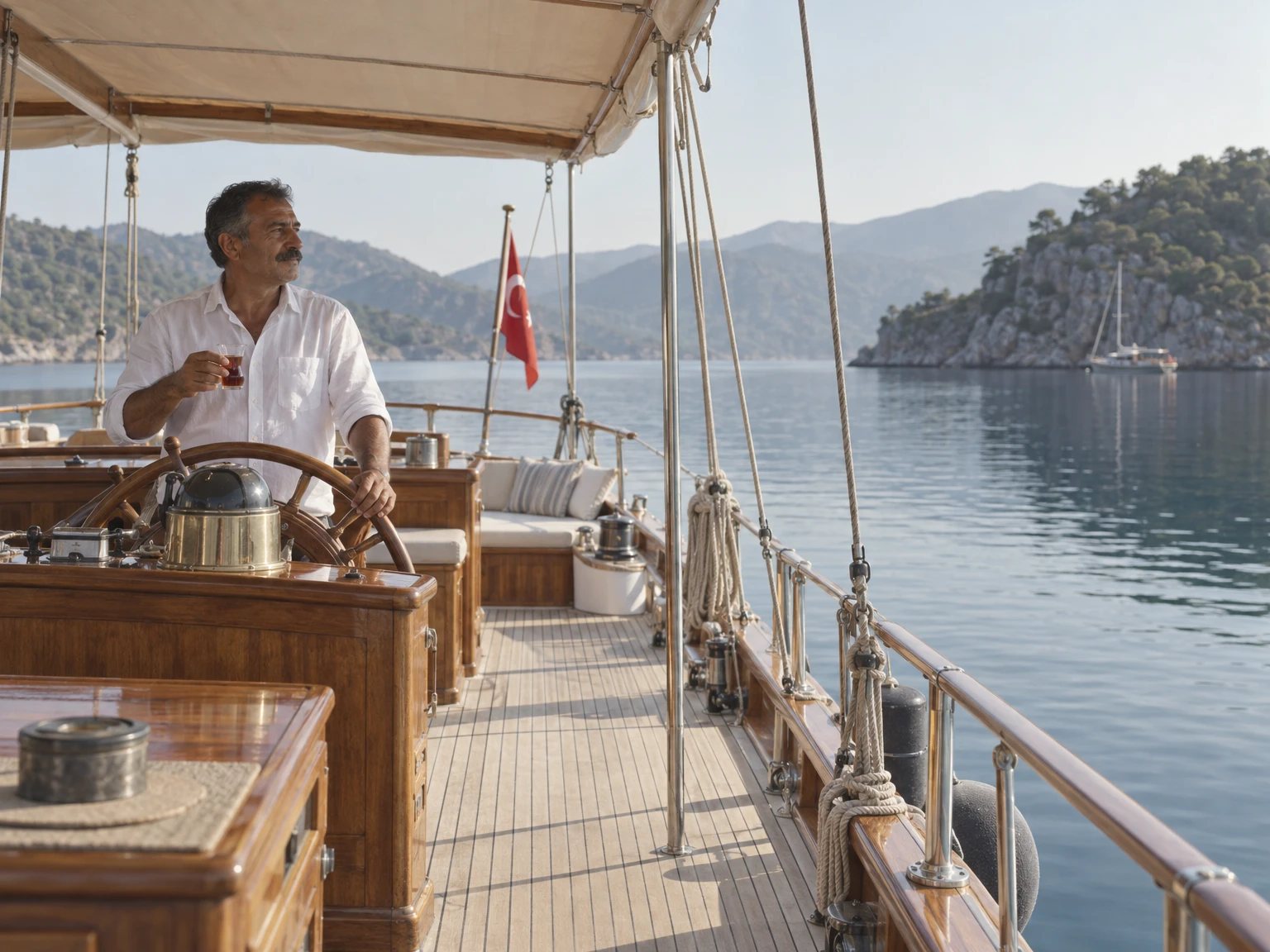
Driving the Amalfi Coast means narrow roads, tight bends and queues for parking. From the water you avoid all that. The towns are stacked up the cliffs facing the sea, and they make most sense when you see them from a deck.
Here is the week we'd suggest for a first charter in the area. It runs one way, from Salerno to Naples, so you're never doubling back. It works just as well in reverse, and your captain will adjust it for the weather and for whatever you want more or less of.
Day 1: Salerno to Cetara
Salerno is an easy place to board, close to the eastern end of the coast. Once you're settled, it's a short first hop west to Cetara, a working fishing village that's quieter than its famous neighbours.
Cetara is known for anchovies and for colatura di alici, an amber anchovy sauce the village has made for generations. Have it tossed through spaghetti at dinner. It's a simple, local way to start the week.
Day 2: Amalfi and Ravello
Morning brings you to Amalfi itself. Climb the steps to the Duomo di Sant'Andrea, then wander the lanes behind the main square before they fill up.
In the afternoon, take a taxi or bus up to Ravello, which sits high above the coast. The gardens of Villa Rufolo and Villa Cimbrone have some of the widest views on the whole peninsula. It's cooler up there, which helps in high summer.
Day 3: Furore, Conca dei Marini and Positano
Cruise slowly west along the cliffs. The Fiordo di Furore is a narrow gorge cut into the rock with a tiny beach at the bottom, best seen from the tender. Nearby, near Conca dei Marini, the Grotta dello Smeraldo is named for the green light that fills the cave.
Spend the evening off Positano. The pastel houses drop almost straight down to the Spiaggia Grande, and the town looks its best as the lights come on. If you're feeling energetic, the Path of the Gods (Sentiero degli Dei) runs high above this stretch, from Bomerano down to Nocelle. Give it a morning and take good shoes.
Day 4: Li Galli, Nerano and Punta Campanella
Just off Positano lie Li Galli, a small group of privately owned islands. You can't go ashore, but the water around them is lovely for a swim from the boat.
Carry on to the Bay of Nerano and Marina del Cantone. This is where spaghetti alla Nerano comes from, made with fried courgettes and cheese, and it's well worth a long lunch. The nearby Bay of Ieranto and the waters around Punta Campanella, at the tip of the Sorrento peninsula, are part of a protected marine area. There are rules here on where boats can go and anchor, and your crew will know them.
Day 5: Capri
Cross the short strait to Capri. Circle the island to see the Faraglioni rock stacks up close, and if the sea is calm, visit the Grotta Azzurra. Entry is by small rowing boat, and the cave closes when there's a swell, so stay flexible.
Capri is very busy in the middle of the day, when the ferries come in. Go ashore early or late. Anacapri, higher up and to the west, is usually calmer than Capri town and the Piazzetta.
Day 6: Ischia
Head north-west across the Bay of Naples to Ischia, a volcanic island known for its thermal springs. Spend the afternoon at one of the thermal gardens, or visit the Castello Aragonese, a fortress on its own rock linked to the island by a causeway.
After five days of cliffs, Ischia feels greener and less hurried.
Day 7: Procida and on to Naples
Procida is the smallest of the three islands and to us the most charming. Marina Corricella is a small harbour lined with painted houses in yellow, pink and blue. Walk it in the morning, before the day-trippers arrive, and stop for a coffee by the water.
From there it's a short run into Naples to disembark. If you have an extra night, stay and eat pizza where it was invented.
A few practical notes
- When to go: June and September are the sweet spot for most guests. The sea is warm and the towns are a little less crowded than in July and August.
- Anchorages: The coast is steep and fairly exposed, and the harbours are small and busy in season. Expect to spend most nights at anchor or on a buoy, and leave berthing decisions to your captain.
- Getting ashore: In most towns the tender drops you right at the waterfront, so you skip the coast road entirely.
- Pace: The distances are short. Leave room in the plan for an extra swim stop or a lazy morning.
Choosing a yacht
For this coast, a motor yacht makes the most of the short hops and gives you more time in each place. A catamaran's stability and space suit families and groups who'd rather spend long days at anchor. Get in touch and we'll tell you which yachts in our fleet are available in Italy for your dates, and help you shape the week around your group.